
Every great business starts with a question: What if?
What if students were encouraged to reflect, prepare and share their ideas with the world?
What if an idea you wrote in your notebook could turn into a real business, one evaluated by industry professionals, backed by research, and powerful enough to shape the future?
For high school students who are curious about business, entrepreneurship, and hospitality, learning how to pitch is one way to clarify ideas, build confidence, and practice thinking like a leader. That’s exactly what the AIHM Business Plan Competition 2026 organised by Asian Institute of Hospitality & Management, is designed to do.
This guide will walk you through the purpose of pitching, what makes a strong business idea, and how you can turn your creativity into a compelling presentation, while introducing an exciting opportunity to put those skills into action.
Preparing young professionals for success

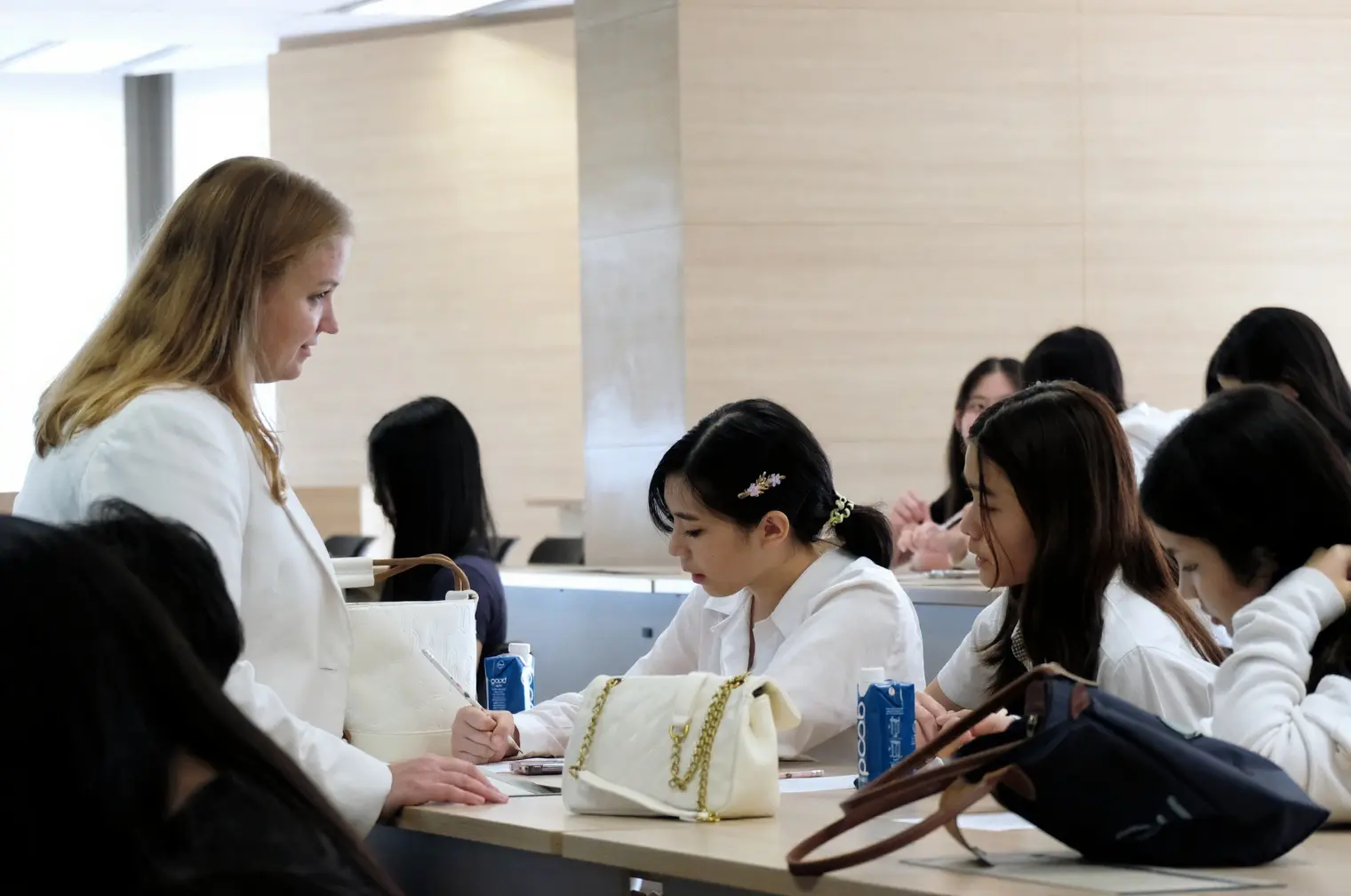
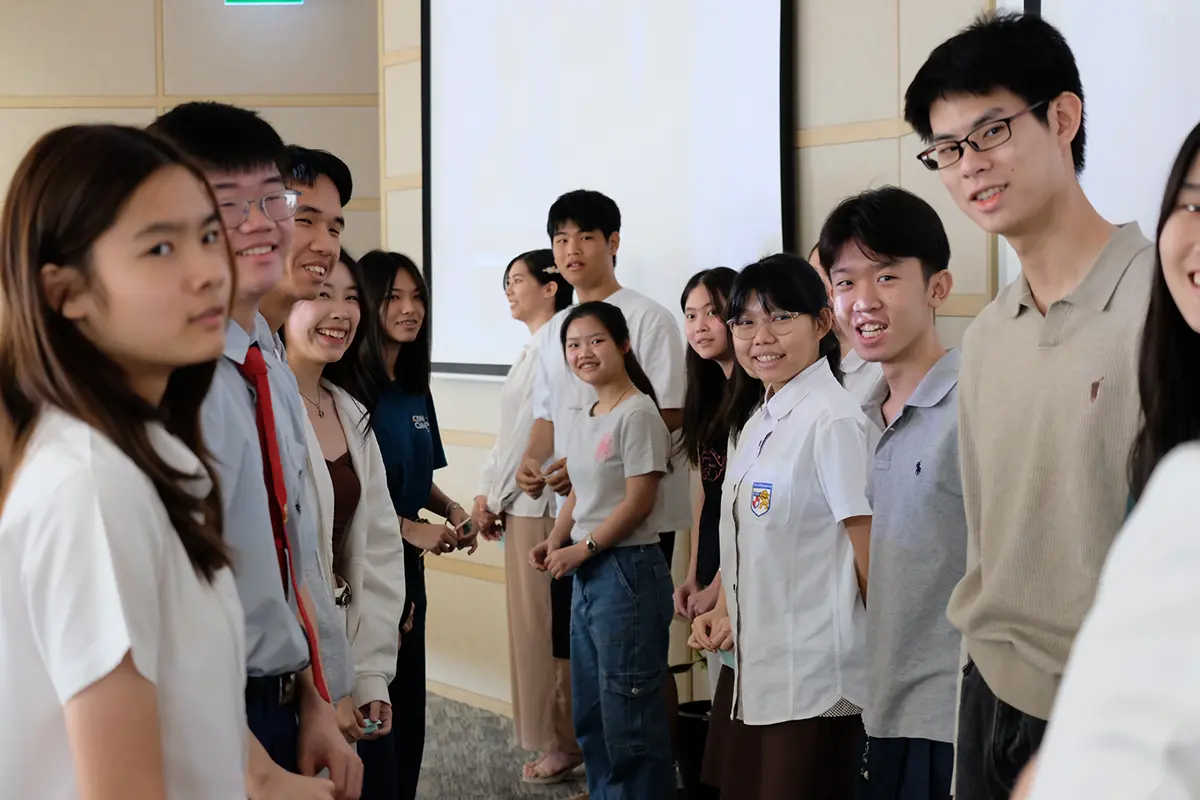
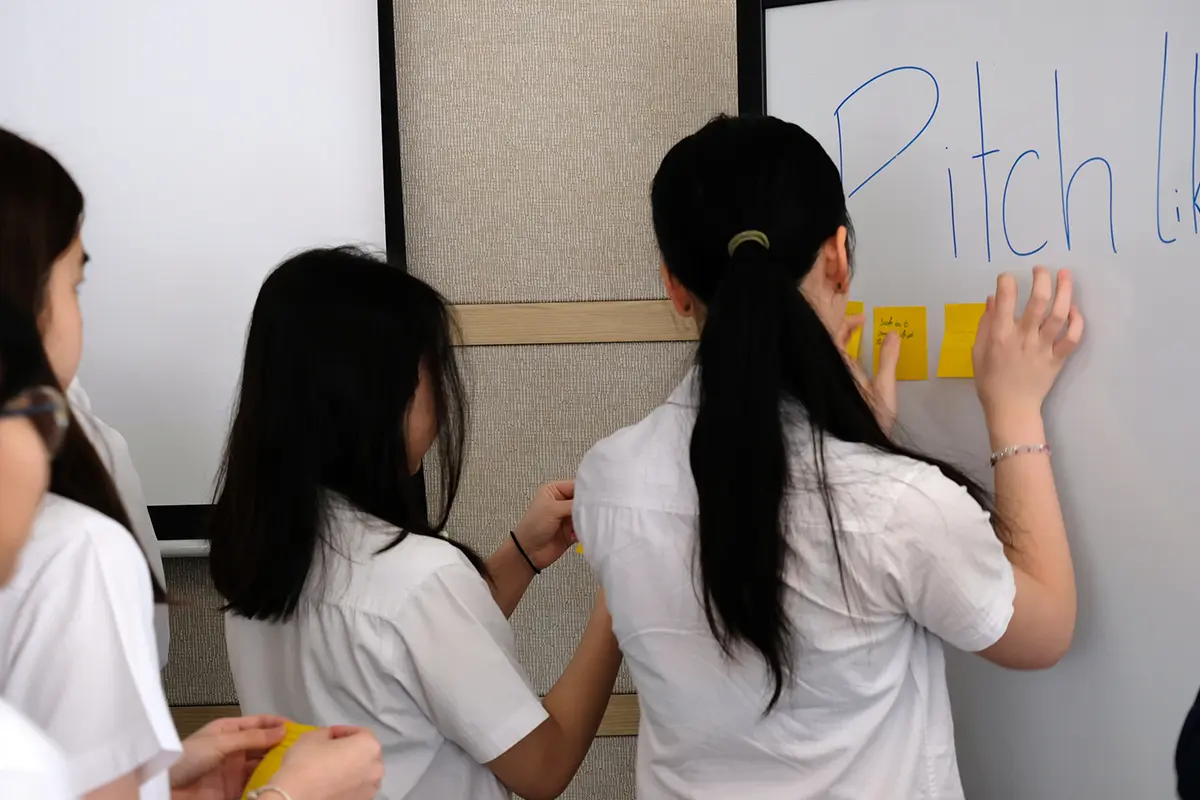
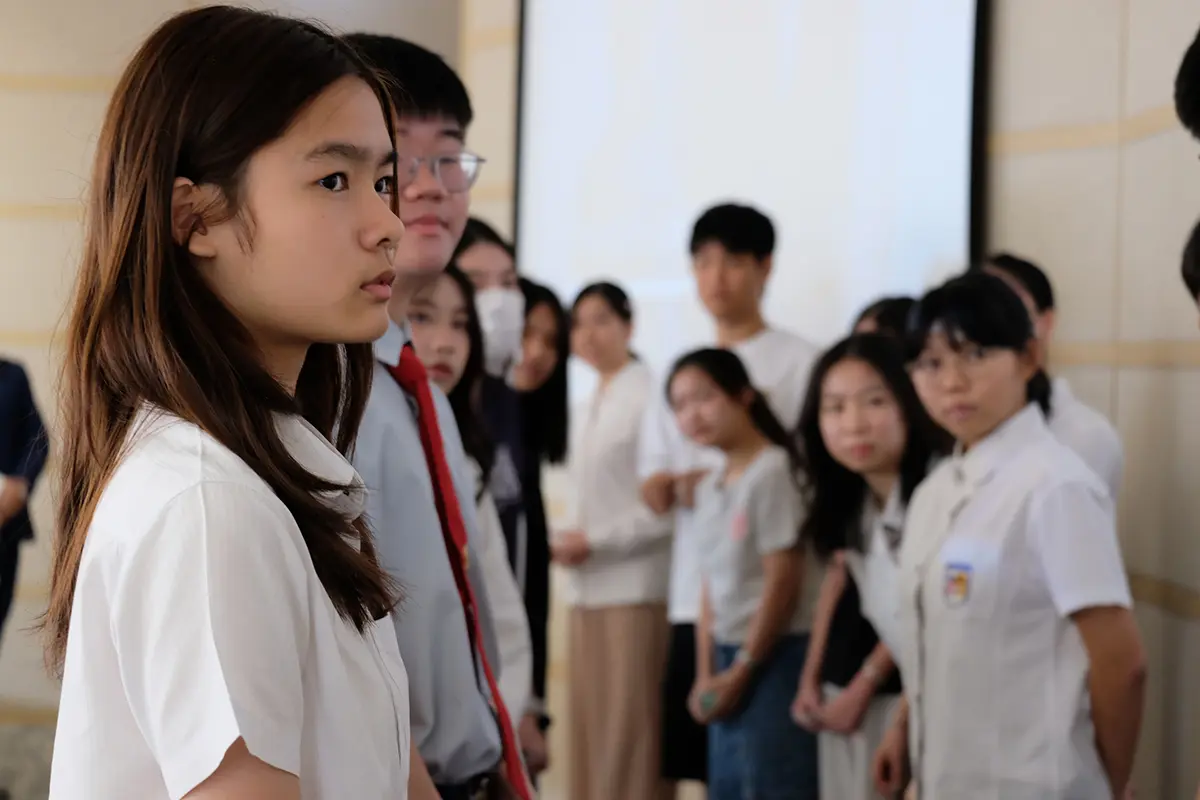
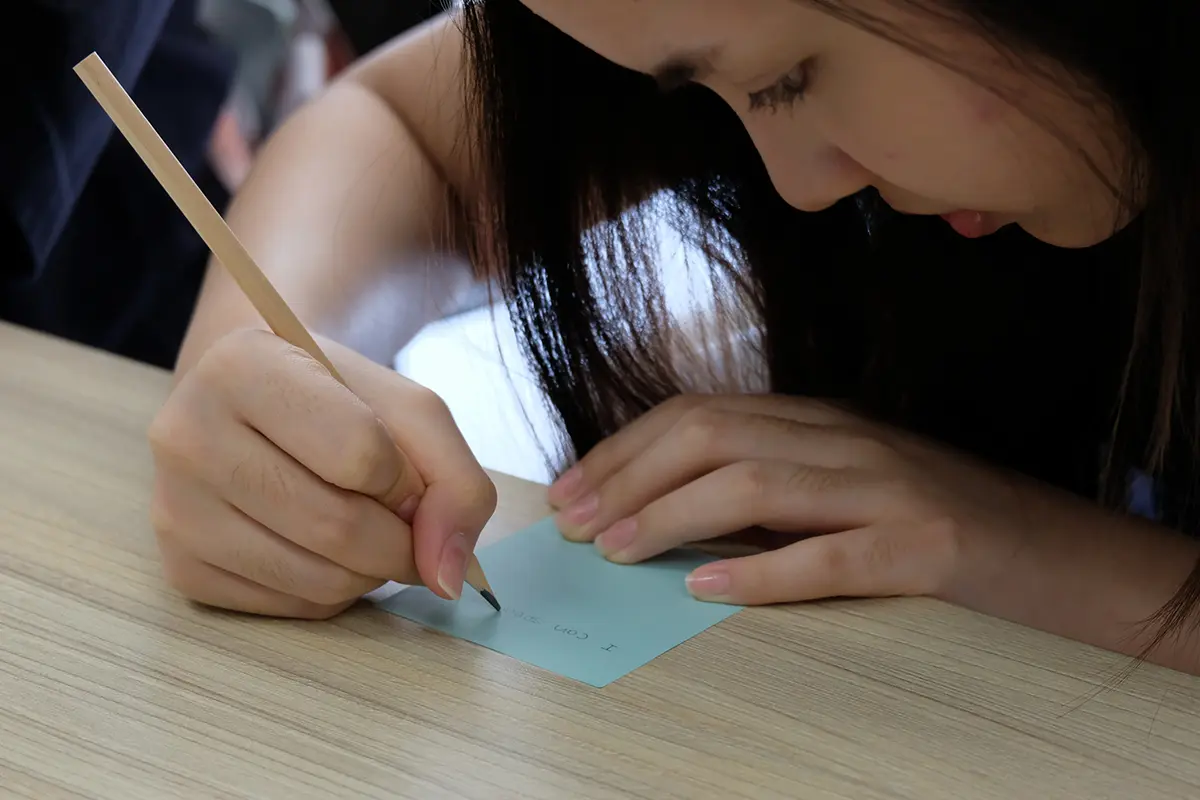
On 31 January at AIHM, students from across Thailand took part in a hands-on Business Pitching MasterClass, Pitch like a Pro, designed to support student’s understanding of what it really takes to pitch an idea with confidence and clarity. Together, we worked through the business pitching loop of success to reflect, prepare, and pitch, giving young professionals a structured yet creative way to explore their ideas.
During this short but intensive session, students were introduced to the core elements of an effective pitch, including unique value, the big idea, the problem, the solution, vision, business model, funding needs, and next steps. Using real examples, we explored how strong pitches are built not just on creativity, but on purpose, relevance, and a clear understanding of the audience.
To bring the framework to life, examples were shared from AIHM Executive Education, showing how real-world ideas are transformed into practical, industry-relevant initiatives.
“At AIHM Executive Education we began with unique value: helping professionals become more confident leaders and share their ideas to create meaningful change, both in person and online. The big idea is focused on serving Thailand’s hospitality industry, which employs over 17 million people and faces a growing demand for leadership and confidence-building skills. We explored why this matters, with Gallup reporting that 85% of global employees are disengaged, and many hospitality professionals in Thailand lacking access to practical leadership training, particularly at middle-management level. The proposed solution is to build training that is fun, practical, and delivered by industry experts, with a long-term vision of reaching 100,000 professionals across Southeast Asia.”
As students reflected on this example, they were challenged to think critically about their own ideas: What inspired you to create your business? Who will benefit from your solution? What pain points are you solving for your future customers? How will you earn revenue? What funding do you need to grow, and what are your next steps over the next 12 months?
The session closed with reflection and momentum, leaving students ready to develop and pitch their own ideas for the upcoming AIHM Business Plan Competition.
What makes a pitch strong?
Having the perfect idea isn’t what makes a pitch strong, it’s about how well you’ve thought it through and how passionate you are about bringing it to life.
Strong teams work together throughout the process including conducting research with leaders in their community, instead of only gathering information from online. A great pitch clearly identifies their customer and target audience, showing how the idea could realistically operate.
This process teaches students how to:
Reflecting on problems worth solving
Preparing by researching, testing, and refining ideas
Pitching ideas clearly, confidently, and creatively
These steps mirror the real entrepreneurial journey.


Why the pitch matters
A pitch is both a story and a presentation, and the best ones come from those actually passionate about the idea. A pitch is how you explain what problem you are solving, who the idea is designed for, why your solution is different and how it could actually be implemented in the real world.
For students, pitching builds skills that matter far beyond business competitions: communication, teamwork, creativity, critical thinking, and confidence. These are the same skills universities and employers look for, especially in fields like hospitality, tourism, events, and entrepreneurship.
Learning to pitch early helps students move from “I have an idea” to “I can explain why this idea matters.”
Turning ideas into action at the 2026 AIHM Business Plan Competition
The AIHM Business Plan Competition 2026 is an opportunity for high school students in Thailand to experience the full journey of building and pitching a business idea, from concept to presentation.
This inaugural competition invites students to work in teams and develop an original hospitality-related business concept, guided by real-world expectations and industry standards.
Teams of students who are in their final three years of high school and currently studying in Thailand are eligible to participate. Each team is asked to identify an opportunity for a new venture in hospitality. This could include:
- Food & Beverage concepts
- Events or experiences
- Youth hostels or alternative accommodation
- Glamping or eco-tourism
- Pop-up restaurants or innovative service ideas
Creativity is encouraged but viability matters. The strongest ideas balance innovation with practicality.
The students who joined us for our Pitch like a Pro Masterclass learned how to pitch following an eight step process, inspired by Sequoia Capital.
Sequoia Capital is a premier American venture capital firm specialising in seed, early, and growth-stage investments in private technology companies. With over $56 billion in AUM, it has backed major companies like Apple, Google, Airbnb, and Stripe, often operating with a long-term partnership approach from inception to IPO.
Linked below is the worksheet that we reviewed so if you were unable to join us you can still benefit from utilising this structure to outline your pitch.

Round 1: The Video Pitch
The first stage is a 4-minute recorded video pitch submitted by 14 February 2026.
In this short video, teams will present:
- An overview of the business concept
- The value proposition
- The target market
- Key activities and offerings
The format is flexible: PowerPoint, animation, voiceover, or creative storytelling are all welcome. What matters most is clarity and persuasion. This stage encourages simple, focused ideas.
Finalists will be announced on 20 February 2026.

Round 2: The live business plan presentation
Selected finalist teams will be invited to present in person at AIHM on 28 February 2026.
This extended 20-minute presentation allows teams to go deeper, covering:
- Business concept and value proposition
- Target market and competitive analysis
- Marketing plan
- Break-even analysis
- Implementation timeline
All team members must participate, and students will answer questions from a panel of judges, just like in real business pitch scenarios.

Prizes & Recognition
For schools, this competition offers a structured, educational way to expose students to entrepreneurship and hospitality careers. For students, it’s a chance to:
- Test ideas in a safe, supportive environment
- Learn directly from industry professionals
- Build confidence in presenting and public speaking
- Discover whether business or hospitality could be part of their future
You don’t need to be an expert to begin, just curious, committed, and willing to learn.
All finalists will receive certificates and meaningful experiences to include in university applications and resumes while the winning teams will take home cash prizes intended to support the development of their team’s idea.
Winning teams will receive:
- 1st Prize: THB 40,000
- 2nd Prize: THB 20,000
- 3rd Prize: THB 10,000
The AIHM Business Plan Competition 2026 is just one place where you can start to develop your skills, your confidence, and your career by creating something that you believe in, together.